Sunscreen Reviews: Best Sunscreens for Every Skin Type
Sunscreen is one of the most important steps in any skincare routine. Whether you have oily, dry, sensitive, or acne-prone skin, choosing the right sunscreen can make a big difference in how comfortable and consistent your routine feels.
However, with so many products available, finding the right one can be confusing. Some sunscreens feel heavy, while others leave a white cast or make the skin look greasy.
That is why we have put together these sunscreen reviews to help you understand what to look for before buying one.
From lightweight formulas for oily skin to moisturizing sunscreens for dry skin, this guide will help you find an option that suits your skin type and daily routine.
Why Is Sunscreen Important?
Sunscreen helps protect your skin from ultraviolet (UV) radiation from the sun. Regular sun protection is an important part of maintaining healthy-looking skin and can help reduce the visible effects of sun exposure.
UV exposure can contribute to:
- Premature-looking skin
- Uneven skin tone
- Dark spots
- Sunburn
- Skin damage
For everyday use, look for a broad-spectrum sunscreen with SPF 30 or higher. If you spend a lot of time outdoors, reapplication becomes especially important.
How We Review Sunscreens
When reviewing sunscreens, we look beyond the SPF number. A sunscreen may have excellent sun protection, but if it feels uncomfortable or does not suit your skin type, you may not want to use it every day.
Here are some of the factors to consider:
1. Texture
A lightweight, easily spreadable texture is generally more comfortable for daily use.
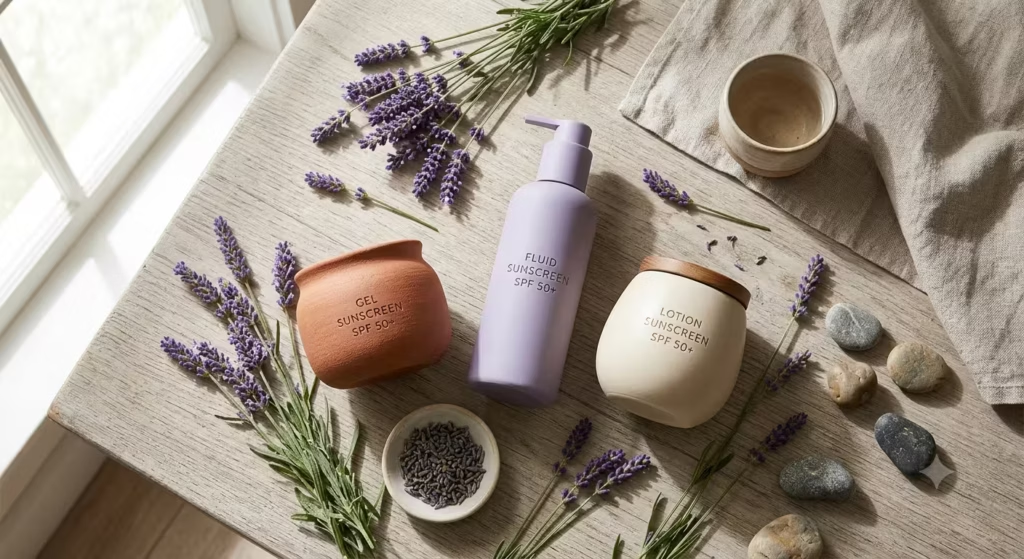
Gel and fluid sunscreens can work particularly well for people who dislike heavy products, while creamier formulas may be more comfortable for dry skin.
2. Finish
The finish can make a big difference.
Some sunscreens leave a:
- Matte finish
- Natural finish
- Dewy finish
- Slightly glowing finish
If you have oily skin, you may prefer a less greasy finish. Dry skin may benefit from a more moisturizing formula.
3. White Cast
A visible white cast can be a concern, especially with some mineral sunscreen formulas.
If you have a deeper skin tone, consider checking user reviews and swatches before purchasing a sunscreen.
4. Skin Type
The best sunscreen is not necessarily the most expensive one. It should match your skin type and be comfortable enough to use consistently.
5. Reapplication
A good sunscreen should also be practical to reapply during the day, particularly if you are outdoors, sweating, or exposed to water.
Sunscreen Reviews for Different Skin Types
Sunscreen for Oily Skin
If your skin becomes shiny quickly, a lightweight sunscreen may be more comfortable than a rich cream.
Look for terms such as:
- Lightweight
- Gel
- Fluid
- Matte
- Oil-free
- Non-comedogenic
A sunscreen that feels heavy or excessively greasy may make you less likely to use it every morning.
Our tip: If you have oily skin, apply your sunscreen after your moisturizer, but consider using a lighter moisturizer if layering several products makes your skin feel greasy.
Sunscreen for Dry Skin
Dry skin often feels more comfortable with a sunscreen that provides some moisturizing benefits.
Look for ingredients and formulas designed to support skin hydration. Cream-based or moisturizing sunscreens can be a good choice if your skin feels tight after cleansing.
Our tip: Apply sunscreen as the final step of your morning skincare routine.
Sunscreen for Sensitive Skin
Sensitive skin can be more reactive to skincare products, so simplicity is often helpful.
When choosing a sunscreen for sensitive skin, pay attention to the complete ingredient list and avoid products that you already know irritate your skin.
A gentle formula with a comfortable texture is more useful than a sunscreen that looks impressive on paper but causes irritation.
Our tip: Always patch-test a new skincare product if you are concerned about irritation.
Sunscreen for Acne-Prone Skin
If you have acne-prone skin, sunscreen is still an important part of your skincare routine.
Many people with acne-prone skin prefer lightweight and non-comedogenic formulas.
However, the term “non-comedogenic” does not guarantee that a particular product will work perfectly for everyone. Individual skin reactions can vary.
Our tip: Introduce one new product at a time so you can understand how your skin responds.
What Makes a Good Everyday Sunscreen?
A good everyday sunscreen should be something you actually enjoy using.
Before buying one, consider these questions:
Does it have adequate SPF?
Look for broad-spectrum protection and SPF 30 or higher for everyday use.
Does it suit your skin type?
Oily, dry, combination, sensitive, and acne-prone skin can have different preferences.
Does it feel comfortable?
If the sunscreen feels excessively sticky, heavy, or greasy, you may struggle to use it consistently.
Does it work with your skincare routine?
Your sunscreen should layer comfortably with your moisturizer and other morning skincare products.
Does it leave a noticeable white cast?
If this is important to you, check reviews and user swatches before purchasing.
Sunscreen Review Checklist
Before purchasing a sunscreen, use this quick checklist:
| Feature | What to Look For |
|---|---|
| SPF | SPF 30 or higher |
| Protection | Broad-spectrum |
| Texture | Comfortable for your skin type |
| Finish | Matte, natural, or dewy based on preference |
| Skin type | Suitable for oily, dry, sensitive, or combination skin |
| White cast | Check reviews and swatches |
| Acne-prone skin | Consider lightweight/non-comedogenic formulas |
| Reapplication | Easy enough to reapply during the day |
Common Sunscreen Mistakes to Avoid
Even the best sunscreen will not be very useful if it is not applied properly.
Using too little sunscreen
One of the most common mistakes is applying too little product.
Make sure you apply enough sunscreen to adequately cover the exposed areas of your face and neck.
Applying sunscreen only on sunny days
UV exposure can occur even when the weather does not feel particularly sunny. Make sunscreen part of your regular daytime skincare routine.
Forgetting the neck
Many people apply sunscreen to their face but forget their neck and other exposed areas.
Not reapplying
If you are spending extended periods outdoors, swimming, or sweating heavily, reapplication is important.
Choosing sunscreen only because of its SPF
A higher SPF number does not automatically mean the product is the best choice for you.
Texture, comfort, broad-spectrum protection, skin type, and how consistently you use the sunscreen also matter.
Final Verdict: Which Sunscreen Should You Choose?
There is no single sunscreen that is perfect for everyone.
The best sunscreen is one that provides appropriate broad-spectrum protection, suits your skin type, feels comfortable, and is easy enough to use consistently.
If you have oily skin, you may prefer a lightweight or gel formula. If your skin is dry, a moisturizing sunscreen may be more comfortable. For sensitive or acne-prone skin, focus on formulas that your skin tolerates well.
Most importantly, don’t choose a sunscreen simply because it is trending. Read the ingredients, check reviews, understand your skin type, and choose a product that fits your routine.
Frequently Asked Questions About Sunscreen
Which SPF is best for daily use?
For everyday use, a broad-spectrum sunscreen with SPF 30 or higher is a good starting point. Your ideal choice can depend on how much sun exposure you get and your daily activities.
Is sunscreen necessary for oily skin?
Yes. Oily skin still needs sun protection. If you dislike greasy products, choose a lightweight sunscreen with a finish that feels comfortable on your skin.
Can people with acne use sunscreen?
Yes. People with acne-prone skin can and should use sunscreen. Lightweight, non-comedogenic formulas may be preferable, but individual skin reactions vary.
Should sunscreen be applied before or after moisturizer?
Generally, sunscreen is applied as the final step of your morning skincare routine, after moisturizer.
How often should sunscreen be reapplied?
Reapplication depends on your activities and sun exposure. If you are outdoors for extended periods, sweating, swimming, or wiping your face, you may need to reapply more frequently.
Final Thoughts
Finding the right sunscreen can take some trial and error. Instead of looking for the one “perfect” product, focus on finding a sunscreen that offers suitable protection and feels comfortable enough for you to use every day.
We hope these sunscreen reviews help you make a more informed choice for your skincare routine.
Remember: consistency matters more than chasing the latest sunscreen trend.