Niacinamide Benefits, Uses, and How It Works: A Complete Guide
Niacinamide is one of the most popular skincare ingredients today, and for good reason. It is a form of vitamin B3 that can help improve several common skin concerns, including excess oil, enlarged-looking pores, uneven skin tone, redness, and a weakened skin barrier.
Unlike some active ingredients that can be irritating when introduced to the skin, niacinamide is generally considered a gentle and versatile ingredient. It can be found in serums, moisturizers, cleansers, toners, and other skincare products.
But what exactly does niacinamide do, and how does it work? Let’s take a closer look.
What Is Niacinamide?
Niacinamide, also called nicotinamide, is a water-soluble form of vitamin B3. It is an essential nutrient involved in several processes in the body and is also widely used in topical skincare.
When applied to the skin, niacinamide supports the skin barrier and can help regulate several processes involved in oil production, pigmentation, and inflammation.
One of the reasons it is so popular is its versatility. It can be useful for people with oily, combination, dry, sensitive, or acne-prone skin when used appropriately.
How Does Niacinamide Work?
Niacinamide works through several pathways rather than targeting just one skin concern.
1. It Supports the Skin Barrier
A healthy skin barrier helps keep moisture inside the skin while protecting it from external irritants.
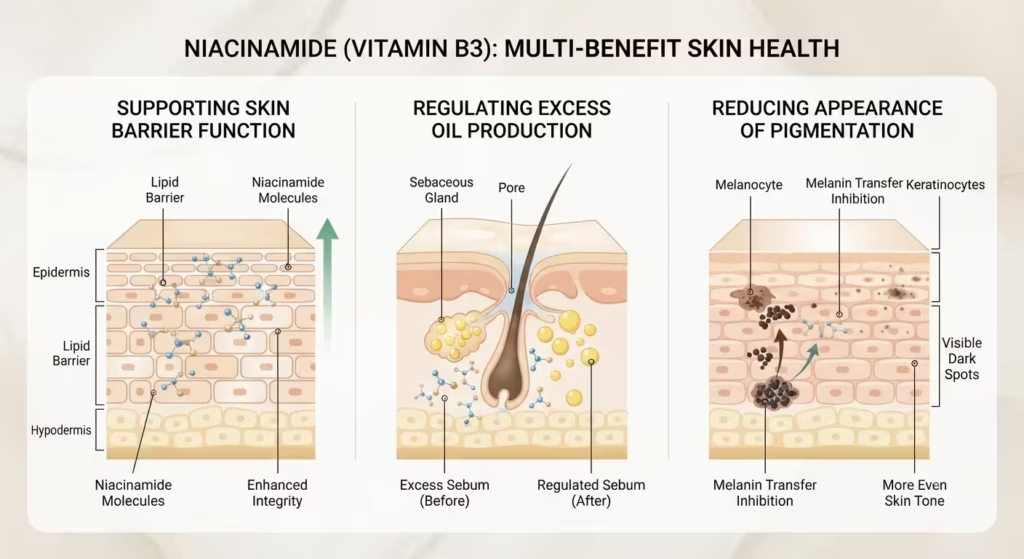
Niacinamide can support the production of ceramides and other components involved in maintaining the skin barrier. This can help improve moisture retention and reduce the feeling of dryness or tightness.
A stronger barrier may also make the skin more resilient to environmental stressors and skincare products.
2. It Helps Regulate Excess Oil
Niacinamide is often included in products designed for oily and acne-prone skin.
Regular use may help regulate sebum production, which can reduce excessive oiliness. Less excess oil can also make the skin appear less shiny throughout the day.
However, niacinamide does not completely stop oil production, and having some natural skin oil is important for healthy skin.
3. It Can Help Reduce the Appearance of Pores
Niacinamide cannot permanently shrink your pores because pore size is influenced by genetics and the structure of your skin.
However, by helping regulate oil production and improving the skin’s overall texture, niacinamide may make enlarged-looking pores appear less noticeable.
This is one reason niacinamide is commonly used in products marketed for smoother-looking skin.
Niacinamide Benefits for Skin
1. Helps Improve Uneven Skin Tone
One of the major niacinamide benefits is its ability to help improve the appearance of uneven skin tone.
Niacinamide can interfere with the transfer of melanin-containing pigment from melanocytes to surrounding skin cells. With consistent use, this may help reduce the appearance of certain types of hyperpigmentation and dark spots.
For better results, niacinamide should be combined with daily sunscreen because UV exposure can contribute to pigmentation.
2. Helps Fade the Appearance of Dark Spots
Niacinamide can be useful for people dealing with post-acne marks and other forms of uneven pigmentation.
It generally works gradually, so you should not expect dark spots to disappear overnight. Consistent skincare and sun protection are important when targeting pigmentation.
3. Strengthens the Skin Barrier
A damaged or weakened skin barrier can lead to dryness, sensitivity, roughness, and increased water loss.
Niacinamide supports barrier function and can help the skin retain moisture more effectively. This makes it a useful ingredient in routines focused on maintaining healthy skin rather than simply treating one particular concern.
4. May Help With Acne-Prone Skin
Because niacinamide can help regulate excess oil and has anti-inflammatory properties, it may be beneficial for people with acne-prone skin.
It can be particularly useful when acne is accompanied by redness or post-acne marks.
However, niacinamide is not a replacement for proven acne treatments when someone has persistent or moderate-to-severe acne.
5. Helps Reduce Redness and Inflammation
Niacinamide has soothing and anti-inflammatory properties that may help reduce the appearance of redness and irritation.
This can make it a useful ingredient for skin that becomes easily irritated.
That said, even gentle ingredients can cause irritation in some people, especially when a product contains a high concentration or is combined with several other active ingredients.
6. Improves Skin Texture
With consistent use, niacinamide may help the skin look smoother and more even.
Its effects on the skin barrier, oil regulation, and pigmentation can collectively contribute to a healthier-looking complexion.
7. Provides Antioxidant Support
Niacinamide is involved in the production of NAD and NADP, molecules that are important for cellular energy and antioxidant-related processes.
This contributes to its role in maintaining healthy skin cells and supporting the skin’s natural defenses.
What Is Niacinamide Used For?
Niacinamide is commonly used in skincare products for:
- Excess oil and shine
- Enlarged-looking pores
- Uneven skin tone
- Dark spots and post-acne marks
- Acne-prone skin
- Redness
- Dry or dehydrated skin
- A weakened skin barrier
- Rough or uneven skin texture
- General skin maintenance
Because it addresses multiple concerns, niacinamide can fit into many different skincare routines.
How to Use Niacinamide in Your Skincare Routine
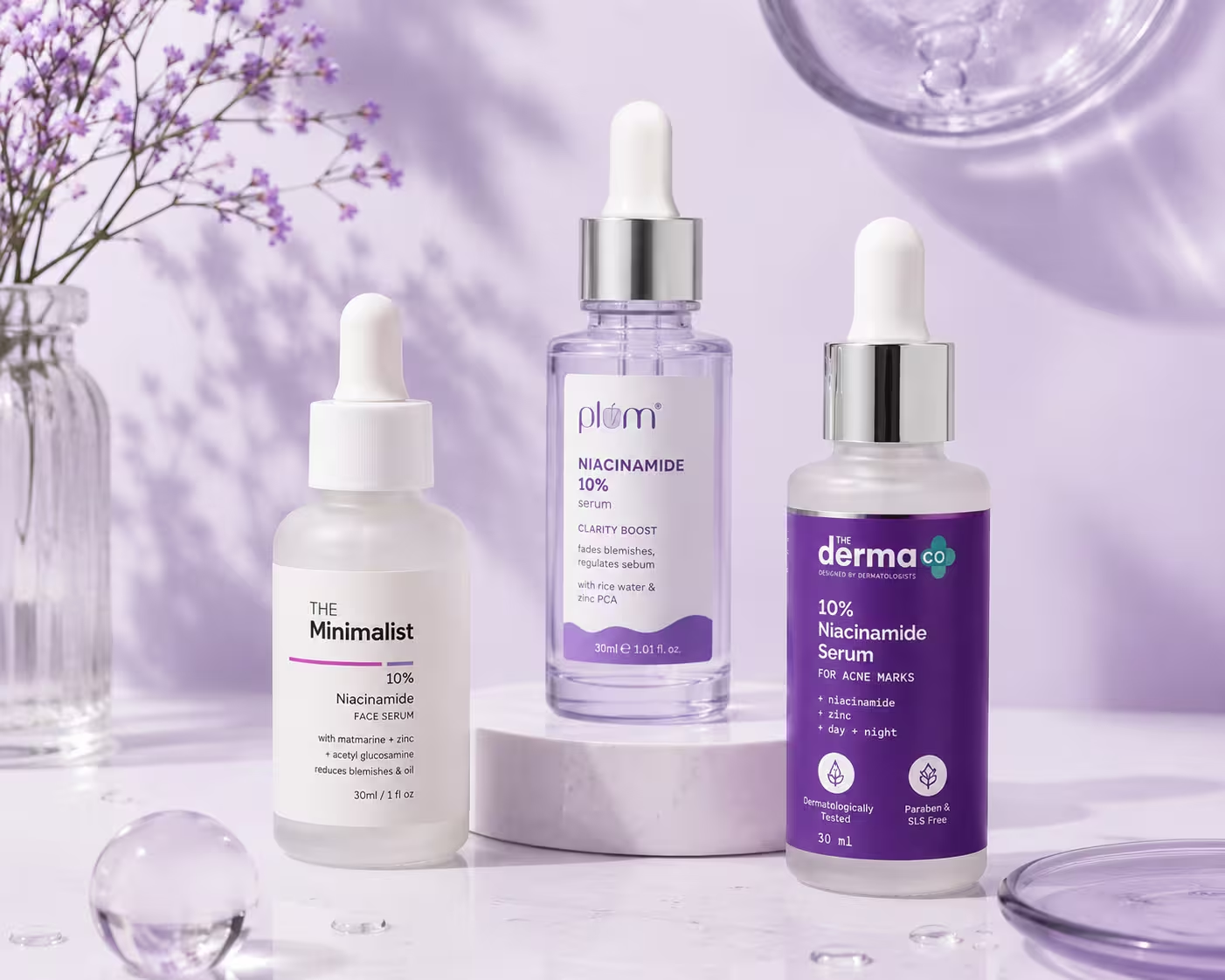
Niacinamide is available in many different formulations, including serums, moisturizers, cleansers, and toners.
If you are using a niacinamide serum, a simple routine could look like this:
Morning:
- Gentle cleanser
- Niacinamide serum
- Moisturizer
- Broad-spectrum sunscreen
Night:
- Cleanser
- Niacinamide serum
- Moisturizer
You do not necessarily need multiple niacinamide products in the same routine. Using one well-formulated product is usually enough.
What Percentage of Niacinamide Is Best?
Niacinamide products are available in different concentrations.
A lower concentration can be a good starting point for beginners or people with sensitive skin. Products around 2–5% are commonly used, while 10% formulations are also widely avail