
Best Moisturisers for Oily Skin: Lightweight Picks That Don’t Feel Greasy
Finding the best moisturiser for oily skin can be tricky. The right moisturiser should feel lightweight, hydrate your skin, and avoid leaving a heavy or greasy finish. In this guide, we’ll look at moisturisers for oily skin and what to consider when choosing one for your skincare routine.
Having oily skin simply means your skin produces more sebum. It doesn’t necessarily mean that your skin has enough water or that it doesn’t need hydration.
The trick is finding a moisturiser that gives your skin the hydration it needs without making it feel greasy or weighed down.
For this guide, we’ve looked at popular moisturisers, their formulations, and the kind of experiences people commonly share about them. Instead of saying that one product is automatically “the best,” we’ve focused on which products may make sense for different oily-skin needs.
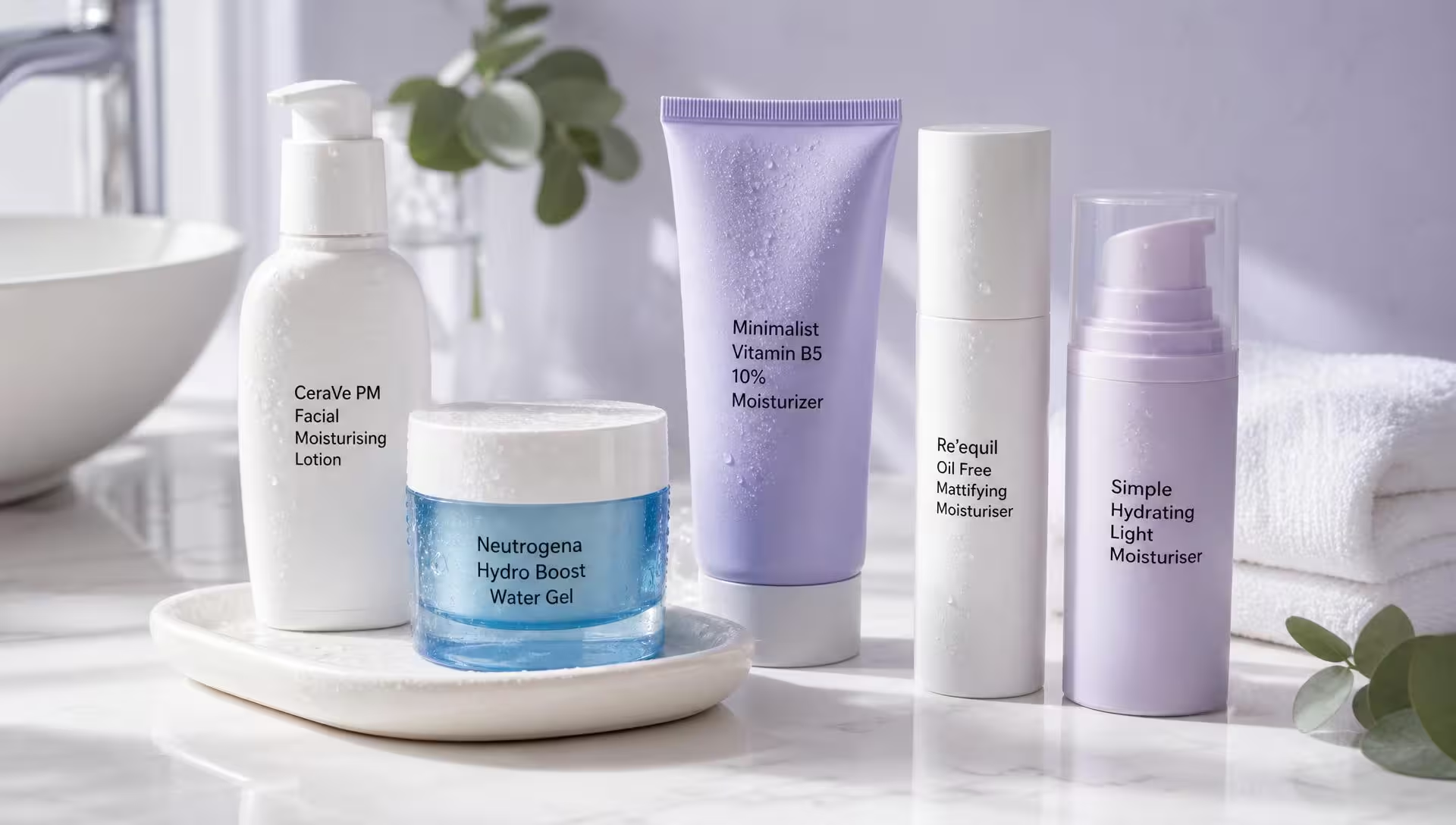
Quick Picks: Best Moisturisers for Oily Skin
- Best for lightweight barrier support: CeraVe PM Facial Moisturising Lotion
- Best for a fresh gel texture: Neutrogena Hydro Boost Water Gel
- Best budget-friendly option: Minimalist Vitamin B5 10% Moisturizer
- Best for oily and acne-prone skin: Re’equil Oil Free Mattifying Moisturiser
- Best for a simple everyday routine: Simple Hydrating Light Moisturiser
These are not ranked as one-size-fits-all winners. Your skin can react differently depending on your sensitivity, climate, skincare routine and even how much product you apply.
1. CeraVe PM Facial Moisturising Lotion – Best for Lightweight Barrier Support
If you want something simple that hydrates your skin without feeling like you’ve put a thick layer of cream on your face, CeraVe PM is worth considering.
It’s a lightweight lotion rather than a heavy cream, and the formula contains ingredients such as ceramides, hyaluronic acid and niacinamide. CeraVe positions it as a nighttime moisturiser designed to hydrate while supporting the skin barrier.
This can be particularly useful if your skin is oily but also feels dry or uncomfortable after cleansing.
What people tend to like
- Lightweight lotion texture
- Doesn’t have the feel of a thick face cream
- Contains barrier-supporting ingredients
- Easy to fit into a simple nighttime routine
- Suitable for people who want hydration without a very greasy finish
Things to keep in mind
If you strongly prefer gel moisturisers, the lotion texture may feel different from what you’re used to.
And if your skin is extremely oily, you may prefer something specifically designed to control shine.
Best for: Oily, combination and normal skin.
2. Neutrogena Hydro Boost Water Gel – Best for a Fresh Gel Texture
If the thought of putting a cream on oily skin already makes you uncomfortable, gel moisturisers can be much easier to live with.
Neutrogena Hydro Boost is well known for its water-gel texture. It feels light when applied and is a popular choice for people who prefer moisturisers that don’t sit heavily on the skin.
This type of texture can be especially pleasant in warm weather when rich creams can feel like too much.
What people tend to like
- Lightweight water-gel texture
- Spreads easily
- Gives the skin a fresh, hydrated feeling
- Doesn’t feel like a traditional heavy cream
- Convenient for daytime routines
Things to keep in mind
A gel texture doesn’t automatically mean a product will work for everyone with oily skin.
If you have sensitive skin, it’s also worth checking the current ingredient list and seeing how your skin responds rather than relying only on the product’s popularity.
Best for: Oily and combination skin.
3. Minimalist Vitamin B5 10% Moisturizer – Best Budget-Friendly Option
If you’re looking for something affordable and don’t want your moisturiser to become the most complicated part of your skincare routine, Minimalist Vitamin B5 10% Moisturizer is one option to consider.
It’s particularly popular among people looking for lightweight hydration without a rich cream-like texture. The product is also frequently listed among moisturisers for oily and acne-prone skin.
Vitamin B5, also known as panthenol, is commonly used in skincare for its moisturising and skin-conditioning properties.
What people tend to like
- Lightweight feel
- Easy to layer with other skincare products
- Doesn’t feel like a heavy cream
- Relatively affordable
- Useful for people who prefer a straightforward routine
Things to keep in mind
Not everyone likes the same texture. What feels lightweight to one person can still feel slightly heavy or sticky to another.
Also, if your skin becomes very dry during winter, you may find that you need a richer moisturiser.
Best for: Oily, combination and acne-prone skin.
4. Re’equil Oil Free Mattifying Moisturiser – Best for Oily and Acne-Prone Skin
If excess shine is one of your biggest complaints, a mattifying moisturiser may be more appealing than a regular hydrating cream.
Re’equil’s Oil Free Mattifying Moisturiser is specifically marketed for oily and acne-prone skin. The brand describes it as non-comedogenic and says it is designed to help manage oily shine while keeping the skin hydrated.
The formula also contains ingredients such as glycerin and sodium hyaluronate, so the product isn’t simply about making the skin feel dry.
What people tend to like
- Designed specifically for oily and acne-prone skin
- Gel moisturiser texture
- Lightweight feel
- Mattifying finish
- Non-comedogenic formulation according to the brand
Things to keep in mind
If you have sensitive skin, don’t assume that “oil-free” automatically means irritation-free. The current ingredient list includes fragrance, so checking the formula is particularly important if your skin is easily irritated.
Best for: Oily and acne-prone skin, particularly if shine is a major concern.
5. Simple Hydrating Light Moisturiser – Best for a Simple Routine
Sometimes you don’t need a moisturiser with a long list of ingredients and complicated claims.
If you prefer keeping your skincare routine simple, a lightweight moisturiser like Simple can make sense.
It’s the kind of product that can easily sit between your cleanser and sunscreen without making your routine feel like a 10-step project.
What people tend to like
- Simple approach to moisturising
- Lightweight feel
- Easy to use every day
- Works well in a basic skincare routine
- Suitable for people who don’t enjoy heavy creams
Things to keep in mind
If your skin is extremely oily, you might prefer a gel formula with a more matte finish.
On the other hand, if your skin is oily but dehydrated, going too lightweight may leave you wanting more hydration.
Best for: Normal, combination and mildly oily skin.
How to Choose a Moisturiser for Oily Skin
Choosing a moisturiser becomes much easier when you stop focusing only on whether the label says “for oily skin.”
Instead, think about how your skin actually behaves.
Does it become shiny within a couple of hours? Does it feel tight after washing? Do you get frequent clogged pores? Does your skin become uncomfortable when you use acne treatments?
Your answers can help you choose a better formula.
Look for Lightweight Textures
Gel, water-gel, gel-cream and lightweight lotion textures are often easier to use on oily skin.
This doesn’t mean creams are automatically bad. Some lightweight creams can work perfectly well for oily skin too.
The important thing is how the formula feels on your skin.
Don’t Forget About Hydration
This is where many people with oily skin go wrong.
They see oil on their face and assume they don’t need moisture.
But oil and hydration aren’t the same thing.
Your skin can produce plenty of sebum and still feel dehydrated.
That’s why ingredients such as glycerin, hyaluronic acid and panthenol can be useful in lightweight moisturisers. Ceramides can also help support the skin barrier.
Consider Your Other Skincare Products
Think about everything else you’re using.
For example, if your routine already includes salicylic acid, retinoids or other potentially drying treatments, you may not want a moisturiser that focuses heavily on oil control.
Sometimes your oily skin needs more barrier support, not more oil-stripping.
If You’re Acne-Prone, Keep It Simple
If you regularly deal with breakouts, clogged pores or acne, look for formulas that are lightweight and non-comedogenic where possible.
But don’t expect your moisturiser to treat acne by itself.
A moisturiser’s main job is to keep your skin hydrated and comfortable. Acne treatment is a separate part of your routine.
Does Oily Skin Really Need Moisturiser?
Yes.
This is probably one of the biggest skincare myths worth clearing up.
Your skin can be oily and dehydrated at the same time.
In fact, completely skipping moisturiser because your face already looks shiny may not be the best approach. The goal isn’t to remove every bit of oil from your skin.
The goal is to find a balance where your skin feels hydrated without feeling greasy.
A lightweight moisturiser can be especially useful if your cleanser or acne products leave your skin feeling tight afterward.
Can Moisturiser Make Oily Skin Look Greasier?
Sometimes, yes.
But that doesn’t necessarily mean moisturiser is the problem.
The formula might simply be too rich for your skin, or you may be applying more product than you need.
Try starting with a small amount and let it settle before applying sunscreen.
If your face still feels greasy every time you use the product, it may be worth switching to a lighter gel or lotion.
And remember: “lightweight” is a texture preference, not a guarantee that a product will suit everyone.
Common Moisturiser Mistakes for Oily Skin
Skipping Moisturiser Altogether
“I have oily skin, so I don’t need moisturiser.”
It sounds logical, but it isn’t.
Oily skin still needs hydration. Instead of skipping moisturiser, find one that feels comfortable for your skin.
Choosing the Strongest Oil-Control Product
More oil control isn’t always better.
If your skin constantly feels tight, dry or irritated after your routine, your products may be doing too much.
Applying Too Much
You don’t need to cover your face in a thick layer of moisturiser.
Start small. You can always apply a little more if your skin needs it.
Changing Products Every Few Days
If you try a new moisturiser today and replace it with another one next week, it becomes difficult to know what is actually working.
Give your routine some consistency and pay attention to how your skin responds.
Assuming “Oil-Free” Means “Perfect for Oily Skin”
Oil-free can be useful, but it’s not the only thing that matters.
Texture, ingredients, fragrance, your other skincare products and your own skin sensitivity all matter too.
Frequently Asked Questions
Which moisturiser is best for oily skin?
There isn’t one moisturiser that will be perfect for everyone. Lightweight gels, gel-creams and lotions are generally good starting points, but your skin’s specific needs should decide the final choice.
Should oily skin use a gel moisturiser?
A gel moisturiser can be a comfortable option because of its lightweight texture. However, don’t choose a product based only on the word “gel.” Check the ingredients and see how your skin reacts.
Can oily and acne-prone skin use moisturiser?
Absolutely. Acne-prone skin still needs hydration. A lightweight, non-comedogenic moisturiser can be a useful part of an acne-friendly routine.
Should I apply moisturiser before sunscreen?
Yes. In a typical morning routine, moisturiser goes on before sunscreen.
How much moisturiser should I use?
Start with a small amount and spread it evenly over your face and neck. If your skin still feels dry, you can add a little more.
Final Thoughts
Finding a good moisturiser for oily skin isn’t about trying to make your skin completely oil-free.
Your skin is supposed to produce some oil. The aim is simply to keep it hydrated, comfortable and balanced without adding unnecessary heaviness.
For some people, that might mean a water-gel moisturiser. For others, a lightweight lotion or mattifying gel may work better.
And don’t be surprised if your ideal moisturiser changes with the weather. A formula that feels perfect during a hot summer may not provide enough moisture when the weather becomes cooler or drier.
So rather than choosing a moisturiser just because it’s popular online, look at the texture, ingredients and your own skin concerns.