Best Non-Comedogenic Sunscreens: Lightweight Picks for Acne-Prone and Oily Skin
Finding the right sunscreen can feel difficult, especially if you have oily or acne-prone skin. You want protection from the sun, but you may also worry about your sunscreen feeling heavy, greasy or uncomfortable on your face.
This is where non-comedogenic sunscreen becomes an important term to understand.
A non-comedogenic product is generally formulated to be less likely to clog pores. However, that doesn’t mean every product will work exactly the same way for everyone. Your skin can react differently depending on your skin type, sensitivity, other skincare products and individual concerns.
In this guide, we’ll look at some popular options often considered by people searching for the best non-comedogenic sunscreens, along with tips to help you choose a formula that feels comfortable enough to wear every day.
Remember that the best sunscreen isn’t necessarily the most expensive or most popular one. The best option is usually one that provides suitable protection and feels comfortable enough for you to use consistently.
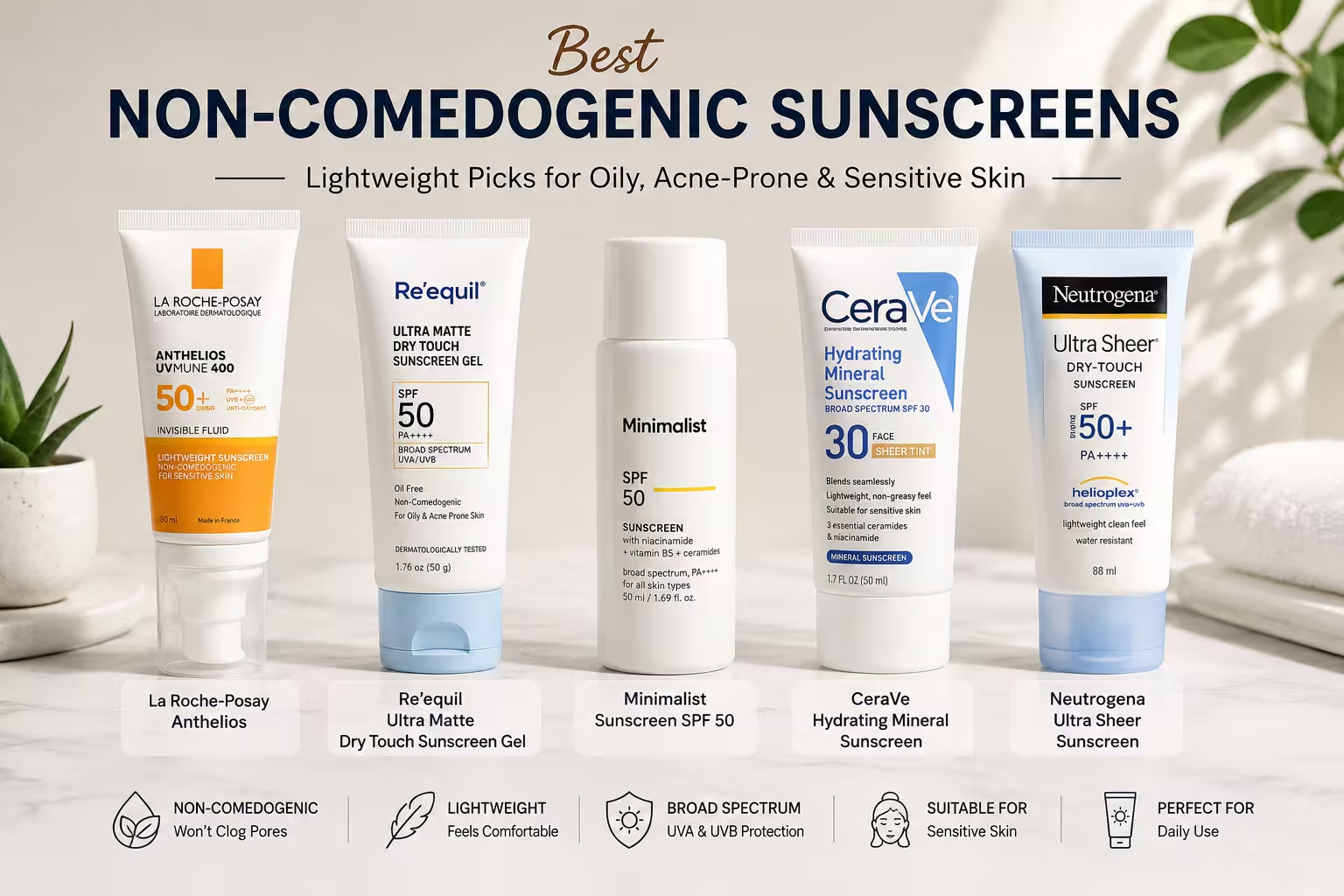
1. La Roche-Posay Anthelios – Best Lightweight Everyday Option
La Roche-Posay Anthelios is a popular sunscreen range, particularly among people who prefer lightweight facial sunscreens.
One reason many people look for lighter formulas is simple: if sunscreen feels greasy or uncomfortable, it’s much harder to use every day.
A lightweight sunscreen can fit more easily into your morning skincare routine, especially if you already use moisturiser or other products underneath.
What people generally like
- Lightweight texture
- Comfortable for everyday use
- Designed for facial use
- Often preferred by people who dislike heavy sunscreen textures
What to consider
Different Anthelios products have different formulas, so it’s important to check the specific version before buying.
Best for: Normal, combination and oily skin.
2. Re’equil Ultra Matte Dry Touch Sunscreen Gel – Best for Oily Skin
For people with oily skin, the finish of sunscreen can be just as important as the level of protection.
A sunscreen that leaves the face looking extremely shiny may not feel comfortable, particularly during hot or humid weather.
Re’equil Ultra Matte Dry Touch Sunscreen Gel is often considered by people who prefer a more matte or silicone-like finish.
What people generally like
- Lightweight gel texture
- Matte finish
- Comfortable for people who dislike greasy sunscreen
- Popular among people with oily and combination skin
What to consider
A matte finish can feel different depending on your skin type. If your skin is very dry or sensitive, you may prefer a more moisturising formula.
Best for: Oily and combination skin.
3. Minimalist Sunscreen SPF 50 – Best for a Lightweight Finish
Minimalist has become popular among people who prefer simple skincare products and straightforward formulations.
Their sunscreen range is often considered by people looking for broad-spectrum daily sun protection with a lightweight feel.
If you dislike the feeling of thick sunscreen, a lighter formula may make it easier to apply the recommended amount.
What people generally like
- Lightweight texture
- Easy to include in a daily skincare routine
- Often preferred by people looking for simple skincare
- Suitable for layering under other products
What to consider
The exact experience can vary depending on the specific sunscreen formula you choose.
Always check whether the sunscreen works comfortably with your moisturiser and makeup.
Best for: Normal, combination and oily skin.
4. CeraVe Hydrating Mineral Sunscreen – Best for Acne-Prone Skin
People with acne-prone skin often want a sunscreen that feels gentle and fits into a simple routine.
CeraVe’s sunscreen products are commonly considered by people looking for formulas that include skin-supporting ingredients such as ceramides.
Mineral sunscreens can also have a different texture and appearance compared with chemical sunscreen formulas.
What people generally like
- Contains skin-supporting ingredients
- Suitable for people who prefer mineral sunscreen
- Can fit into a barrier-focused skincare routine
- Often considered by people with sensitive skin
What to consider
Mineral sunscreens can sometimes leave a visible cast, depending on the formula and your skin tone.
The texture may also feel different from lightweight chemical sunscreen formulas.
Best for: Sensitive and acne-prone skin.
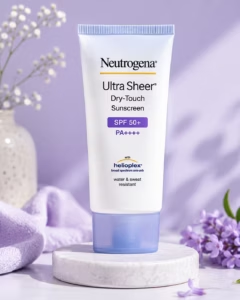
5. Neutrogena Ultra Sheer Sunscreen – Best Budget-Friendly Option
If you are looking for a widely available sunscreen, Neutrogena Ultra Sheer is another option many people consider.
It is known for its lightweight positioning compared with traditional heavy sunscreen creams.
For everyday use, convenience matters. A sunscreen that is easy to apply and comfortable to wear is more likely to become a regular part of your routine.
What people generally like
- Widely available
- Lightweight feel
- Easy to use as part of a daily routine
- Often considered a convenient option
What to consider
Different versions may have different finishes and formulas.
If you have sensitive or acne-prone skin, always check the ingredient list of the exact version you’re considering.
Best for: Normal and combination skin.
What Does Non-Comedogenic Actually Mean?
The word non-comedogenic generally means that a product is formulated to be less likely to clog pores.
Comedones are clogged pores that can appear as blackheads or whiteheads.
However, seeing the words “non-comedogenic” on a product doesn’t guarantee that it will never cause breakouts for you.
There are many reasons why someone might experience breakouts, including:
- Individual sensitivity to an ingredient
- Other skincare products in the routine
- Hormonal changes
- Makeup or hair products
- Not cleansing sunscreen properly
- Existing acne or clogged pores
This is why choosing a sunscreen should involve more than simply looking for one label on the packaging.
How to Choose the Best Non-Comedogenic Sunscreen
Choose a Texture You Actually Enjoy Wearing
If you have oily skin, you might prefer:
- Lightweight fluids
- Gel sunscreens
- Water-based formulas
- Matte or natural finishes
If you have dry skin, you may prefer:
- Creamier textures
- Hydrating formulas
- Sunscreens that feel moisturising
The best texture is the one that feels comfortable enough for you to apply consistently.
Consider Your Skin Type
Oily Skin
Oily skin may prefer lightweight, gel or fluid formulas that don’t feel overly greasy.
However, avoid choosing a sunscreen simply because it makes your skin feel extremely dry or tight.
Dry Skin
Dry skin may feel more comfortable with a hydrating sunscreen that has a creamier texture.
Look for formulas that contain moisturising ingredients and don’t leave your skin feeling tight.
Sensitive Skin
If your skin is easily irritated, keeping your skincare routine simple can be helpful.
Check the ingredient list and introduce new products carefully.
Acne-Prone Skin
If you are concerned about breakouts and clogged pores, look for lightweight formulas and consider choosing products labelled as non-comedogenic.
However, remember that individual skin reactions can vary.
Common Mistakes People Make With Sunscreen
Applying Too Little
Many people apply much less sunscreen than they actually need.
Using a very small amount may mean you’re not getting the same level of protection shown on the product label.
Only Using Sunscreen When It’s Sunny
Sun exposure can still be relevant even when the weather doesn’t feel extremely hot.
Making sunscreen part of your regular daytime routine can make it easier to stay consistent.
Choosing Sunscreen Only Based on SPF
SPF is important, but texture and comfort matter too.
A sunscreen with a high SPF won’t be very useful if you dislike wearing it and constantly skip applying it.
Changing Sunscreens Too Frequently
If you switch products every few days, it becomes difficult to understand how your skin is responding.
Give your skin time to adjust and pay attention to patterns.
Frequently Asked Questions
Is non-comedogenic sunscreen better for acne-prone skin?
It can be a useful option because it is formulated to be less likely to clog pores. However, it doesn’t guarantee that everyone with acne-prone skin will have the same experience.
Can oily skin use sunscreen every day?
Yes. Oily skin can still benefit from daily sun protection. The key is choosing a texture that feels comfortable.
Can sunscreen cause breakouts?
Some people may notice breakouts after introducing a new sunscreen, but there can be many possible reasons. Consider the formula, your overall skincare routine and other changes that may have happened at the same time.
Should I use moisturiser before sunscreen?
Generally, moisturiser is applied first if you need it, followed by sunscreen as the final step of your morning skincare routine.
How much sunscreen should I apply?
Use enough to cover all exposed areas of skin as directed