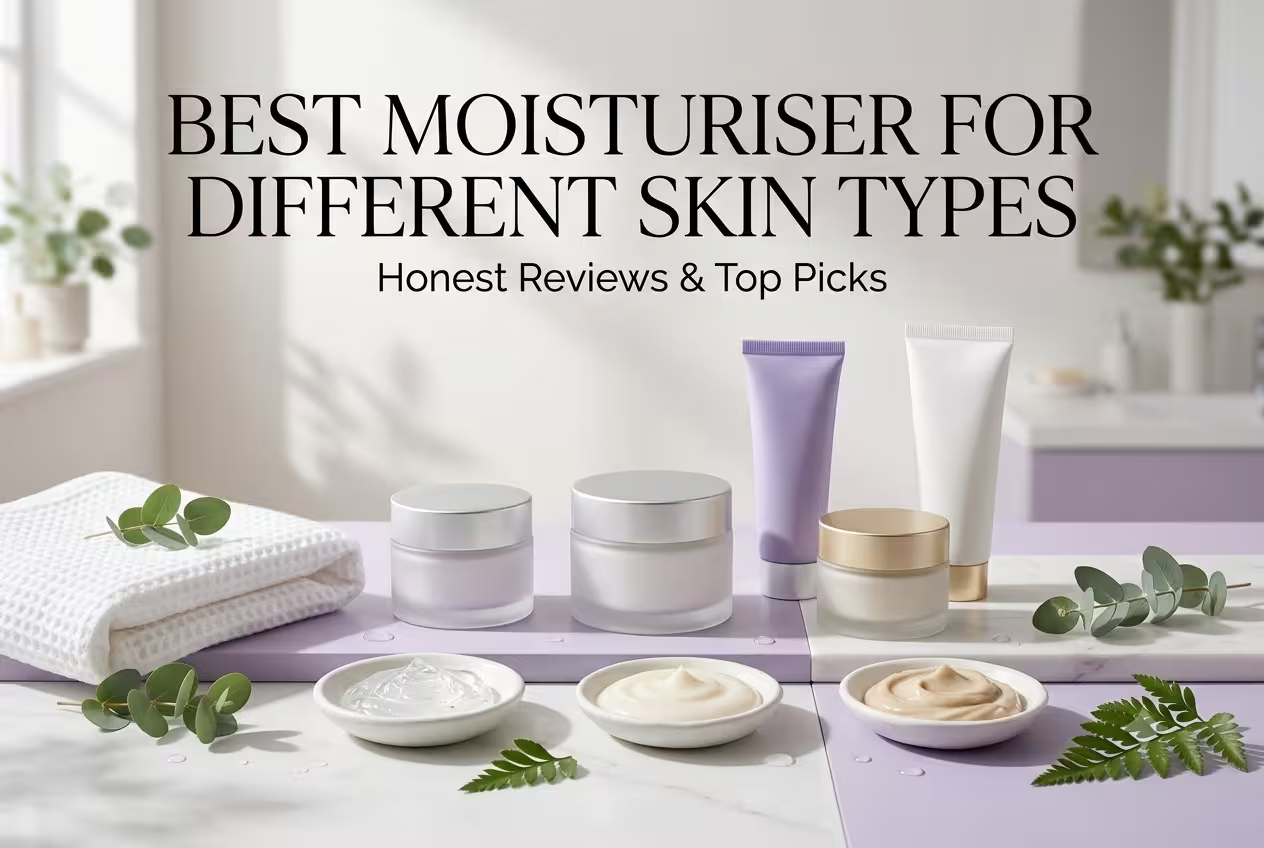
Best Moisturiser for Different Skin Types: Honest Reviews & Top Picks
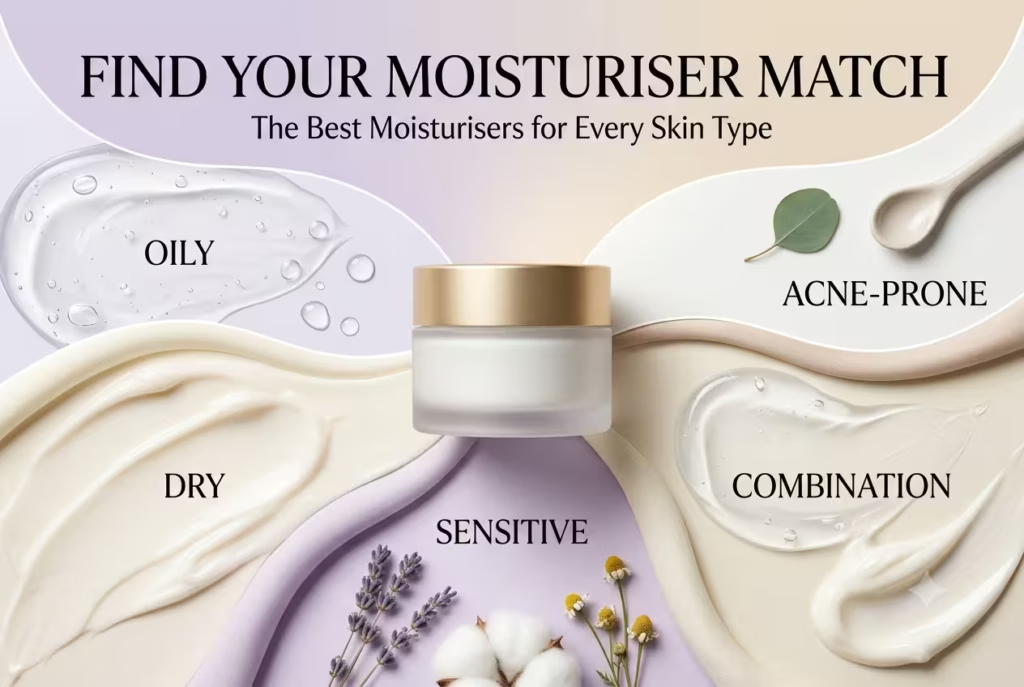
Finding the best moisturiser for different skin type can make a big difference to your skincare routine.
However, not every moisturiser works equally well for every skin type. A rich cream may feel comfortable on dry skin but heavy on oily skin. Similarly, a lightweight gel may suit oily skin but may not provide enough moisture for very dry skin.
Therefore, choosing a moisturiser based on your skin type is more important than simply buying a popular product.
In this guide, we review some popular moisturisers for oily, dry, sensitive, combination, and acne-prone skin.
We will also explain what each moisturiser does well, who should use it, and who may want to skip it.
Quick Comparison: Best Moisturisers for Different Skin Types
| Moisturiser | Best For | Skin Type | Key Feature |
|---|---|---|---|
| CeraVe Moisturising Cream | Deep hydration | Dry & normal | Ceramides + hyaluronic acid |
| Neutrogena Hydro Boost Water Gel | Lightweight hydration | Oily & combination | Gel texture + hyaluronic acid |
| Minimalist Marula Oil 5% Moisturizer | Barrier support | Dry & sensitive | Marula oil + squalane |
| Re’equil Oil Free Moisturiser | Lightweight moisture | Oily & acne-prone | Oil-free formula |
| Dot & Key 72HR Hydrating Gel | Hydration | Combination & oily | Gel texture + hydrating ingredients |
Product availability, prices, and formulations can change. Always check the current product label before buying.
How We Choose the Best Moisturiser
A good moisturiser should do more than simply make your skin feel soft.
Instead, it should help maintain skin hydration and support a healthy skin barrier without feeling unnecessarily heavy or irritating.
For this review, we considered:
- Skin type suitability
- Key ingredients
- Hydration
- Texture and finish
- Potential for heaviness
- Everyday usability
- Value for money
Most importantly, we considered whether each moisturiser makes sense for the skin type it is recommended for.
1. CeraVe Moisturising Cream – Best for Dry Skin
Dry skin usually needs more than a lightweight layer of hydration.
Instead, a richer moisturiser can help provide longer-lasting comfort and support the skin barrier.
CeraVe Moisturising Cream is a popular option for normal to dry skin. It contains ceramides and hyaluronic acid, which make it suitable for people looking for a more nourishing moisturiser.
What We Like
- Suitable for dry and normal skin
- Contains ceramides
- Contains hyaluronic acid
- Rich, creamy texture
- Useful for supporting the skin barrier
What We Don’t Like
The richer texture may feel heavy if you have very oily skin.
Therefore, people with oily skin may prefer a lighter gel or lotion.
Our Verdict
Rating: 4.5/5
Overall, this is a strong choice if your skin frequently feels dry, tight, or uncomfortable.
Best for: Dry and normal skin
2. Neutrogena Hydro Boost Water Gel – Best for Oily Skin
Oily skin still needs moisturiser.
In fact, skipping moisturiser can make your skincare routine less balanced.
Neutrogena Hydro Boost Water Gel has a lightweight gel texture. Therefore, it can be a convenient option if you want hydration without a rich cream-like finish.
What We Like
- Lightweight gel texture
- Comfortable for oily and combination skin
- Easy to layer under sunscreen
- Hydrating feel
- Non-heavy finish
What We Don’t Like
It may not provide enough moisture for very dry skin.
However, this can be an advantage if richer creams usually feel uncomfortable on your skin.
Our Verdict
Rating: 4.5/5
If you have oily or combination skin and prefer lightweight skincare, this is worth considering.
Best for: Oily and combination skin
3. Minimalist Marula Oil 5% Moisturizer – Best for Dry & Sensitive Skin
Sensitive skin often benefits from a simple moisturising routine.
Therefore, choosing a moisturiser that focuses on hydration and barrier support can be a good starting point.
Minimalist Marula Oil 5% Moisturizer is designed to provide moisturisation while supporting dry and sensitive skin.
What We Like
- Suitable for dry skin
- Comfortable moisturising texture
- Contains marula oil
- Contains squalane
- Useful for a barrier-focused routine
What We Don’t Like
The texture may feel richer than a gel moisturiser.
As a result, people with very oily skin may prefer a lighter option.
Our Verdict
Rating: 4.4/5
This is a good option if your skin feels dry and you want a moisturiser that fits into a simple barrier-care routine.
Best for: Dry and sensitive skin
4. Re’equil Oil Free Moisturiser – Best for Acne-Prone Skin
Acne-prone skin can be tricky to moisturise.
You want enough hydration to keep your skin comfortable. At the same time, you may not want a heavy or greasy finish.
Re’equil Oil Free Moisturiser is a lightweight option that can work well for oily and acne-prone skin.
What We Like
- Lightweight texture
- Suitable for oily skin
- Oil-free formula
- Comfortable for everyday use
- Works well in a simple skincare routine
What We Don’t Like
If your skin is extremely dry, you may need a richer moisturiser.
Therefore, this may not be the best choice for very dry skin.
Our Verdict
Rating: 4.4/5
If you have oily or acne-prone skin and dislike heavy creams, this is a practical option to consider.
Best for: Oily and acne-prone skin
5. Dot & Key 72HR Hydrating Gel – Best for Combination Skin
Combination skin usually has both oily and dry areas.
For example, your T-zone may become oily while your cheeks feel normal or slightly dry.
A lightweight gel moisturiser can therefore be a useful choice.
Dot & Key 72HR Hydrating Gel has a lightweight texture and is designed to provide hydration without a heavy cream-like feel.
What We Like
- Lightweight gel texture
- Suitable for combination skin
- Comfortable everyday finish
- Easy to layer
- Useful for warmer weather
What We Don’t Like
It may not be rich enough for very dry skin.
In addition, if your skin barrier is severely dry or irritated, you may prefer a more nourishing moisturiser.
Our Verdict
Rating: 4.3/5
Choose this one if you want lightweight hydration and your skin tends to become oily in some areas.
Best for: Combination and oily skin
Which Moisturiser Is Best for Your Skin Type?
Still confused?
Don’t worry. Here is the simple version.
Oily Skin
Choose Neutrogena Hydro Boost Water Gel if you prefer a lightweight gel texture.
Alternatively, Re’equil Oil Free Moisturiser can be considered if you want an oil-free option.
Dry Skin
Choose CeraVe Moisturising Cream if your skin frequently feels tight or dry.
A richer moisturiser can provide more comfortable hydration than a very lightweight gel.
Sensitive Skin
Choose Minimalist Marula Oil 5% Moisturizer if you want a moisturiser focused on hydration and barrier support.
However, always check the current ingredient list if you already know that certain ingredients irritate your skin.
Acne-Prone Skin
Choose Re’equil Oil Free Moisturiser if you prefer lightweight hydration.
Most importantly, remember that moisturiser does not need to feel heavy to provide useful hydration.
Combination Skin
Combination skin needs balance.
Therefore, a lightweight gel moisturiser can be a good starting point.
Neutrogena Hydro Boost Water Gel or Dot & Key 72HR Hydrating Gel can be considered depending on how oily or dry your skin feels.
What Ingredients Should You Look for in a Moisturiser?
The right ingredients depend on your skin type and concerns.
| Skin Concern | Ingredients to Consider |
|---|---|
| Dryness | Hyaluronic acid, glycerin, ceramides |
| Oily skin | Lightweight humectants, niacinamide |
| Sensitive skin | Ceramides, squalane, gentle formulas |
| Skin barrier support | Ceramides, squalane, fatty acids |
| Dehydrated skin | Hyaluronic acid, glycerin |
| Combination skin | Lightweight hydrating ingredients |
Remember: an ingredient is only one part of the formula.
For example, hyaluronic acid can help attract water to the skin. However, the overall moisturiser formula and your skincare routine also matter.
How Often Should You Use Moisturiser?
For most people, moisturiser can be used twice a day.
Apply it after cleansing while your skin is slightly damp.
In the morning, follow your moisturiser with sunscreen.
At night, moisturiser can be the final step of your basic skincare routine.
However, you do not necessarily need the same amount every time.
If your skin feels oily during the day, use a lighter layer. On the other hand, you may prefer a slightly richer layer at night if your skin feels dry.
Common Moisturiser Mistakes to Avoid
1. Skipping Moisturiser Because You Have Oily Skin
Oily skin still needs hydration.
Therefore, instead of skipping moisturiser completely, look for a lightweight formula that feels comfortable on your skin.
2. Choosing a Heavy Cream for Very Oily Skin
A rich moisturiser is not automatically better.
Instead, choose a texture that suits your skin and the climate you live in.
3. Using Too Much Product
More moisturiser does not always mean more hydration.
A small, even layer is usually enough to cover the face.
4. Ignoring Your Skin’s Changing Needs
Your skin can change with weather, stress, products, and lifestyle.
For example, you may prefer a lightweight gel during hot weather but a richer cream during colder months.
5. Forgetting Sunscreen in the Morning
Moisturiser and sunscreen have different purposes.
Therefore, use sunscreen as the final step of your morning skincare routine.
Final Verdict: Which Moisturiser Should You Buy?
There is no single universal best moisturiser for different skin types.
Instead, the right moisturiser depends on your skin’s needs, texture preference, and overall skincare routine.
Dry skin: CeraVe Moisturising Cream
Oily skin: Neutrogena Hydro Boost Water Gel
Sensitive skin: Minimalist Marula Oil 5% Moisturizer
Acne-prone skin: Re’equil Oil Free Moisturiser
Combination skin: Dot & Key 72HR Hydrating Gel
Ultimately, the best moisturiser is one that keeps your skin comfortable and hydrated without feeling unnecessarily heavy, greasy, or irritating.
So, before buying your next moisturiser, look beyond the packaging.
Check the ingredients, consider your skin type, and choose a texture that fits comfortably into your daily skincare routine.