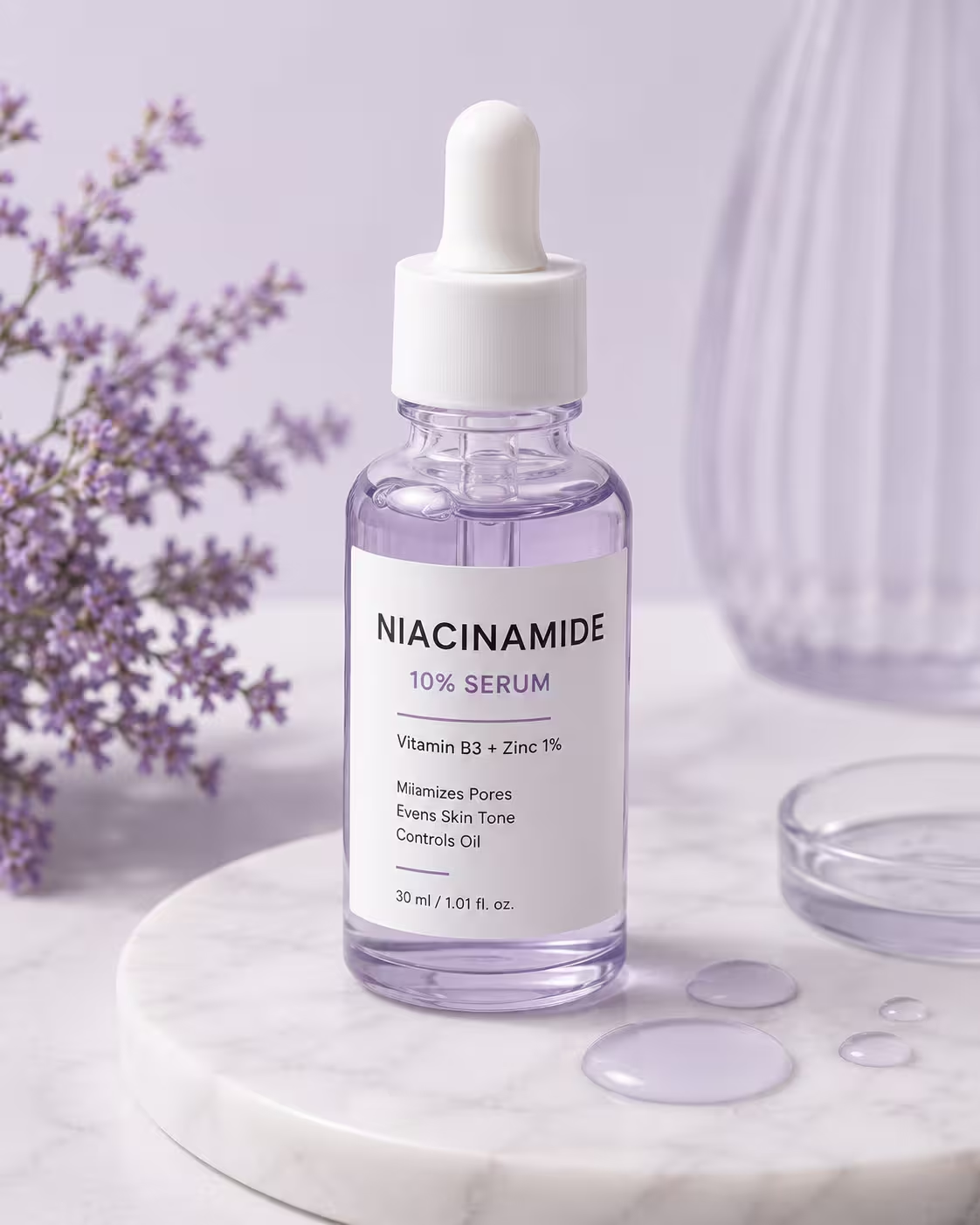
Niacinamide in Skincare: Benefits, Uses, Side Effects & How to Use It
Niacinamide benefits have made this vitamin B3 ingredient a popular choice in skincare. It can help support the skin barrier, control excess oil, improve uneven skin tone, and make pores look less noticeable.
But what exactly is niacinamide? How does it work, and is it suitable for your skin?
In this guide, you’ll learn about the benefits of niacinamide, how to use it, which concentration to choose, and its possible side effects. We’ll also look at which skincare ingredients you can use with it.
What Is Niacinamide?
Niacinamide is a form of vitamin B3, also known as nicotinamide. It is a water-soluble vitamin that plays an important role in maintaining healthy skin.
In skincare, niacinamide is primarily used to support the skin barrier, regulate excess oil, improve the appearance of uneven skin tone, and make pores look less noticeable.
Unlike exfoliating acids or retinoids, niacinamide is generally considered a relatively gentle ingredient, making it suitable for many different skin types.
What Does Niacinamide Do for Your Skin?
Niacinamide has several potential skincare benefits. Some of the most commonly studied and recognized benefits include:
1. Helps Strengthen the Skin Barrier
One of the biggest benefits of niacinamide is its ability to support the skin barrier.
The skin barrier helps prevent excessive water loss and protects the skin from environmental irritants. Niacinamide can support the production of important components of the skin barrier, including ceramides.
A stronger barrier can help skin feel more comfortable, hydrated, and less prone to dryness.
2. Helps Control Excess Oil
Niacinamide may help regulate sebum production, making it useful for people with oily or combination skin.
If your skin becomes very oily during the day, a niacinamide serum may help improve the appearance of excess oil over time.
However, it does not mean that higher concentrations will automatically provide better oil control.
3. May Reduce the Appearance of Pores
Niacinamide does not literally “close” or permanently shrink your pores.
However, by helping regulate oil production and improving the overall condition of the skin, it can make pores appear less noticeable.
This is one reason niacinamide is commonly included in products marketed for oily and combination skin.
4. Helps Improve Uneven Skin Tone
Niacinamide can help improve the appearance of uneven pigmentation and dark spots.
It works differently from exfoliating acids because it can interfere with the transfer of melanin-containing pigment to surrounding skin cells.
With consistent use, this may help make some areas of pigmentation look less prominent.
5. Supports Healthy-Looking Skin
Niacinamide has antioxidant and anti-inflammatory properties and can help support the skin against environmental stress.
It is also commonly used in products designed for skin that looks dull, uneven, or stressed.
6. May Help With Acne-Prone Skin
Because niacinamide can help with oil regulation and inflammation, it may be useful for people with acne-prone skin.
However, niacinamide should not be considered a replacement for proven acne treatments when someone has persistent or moderate-to-severe acne.
Niacinamide Concentration: What Percentage Should You Use?
You will commonly see niacinamide products containing concentrations such as 2%, 5%, 10%, or even higher.
More is not necessarily better.
For many people, a lower or moderate concentration can provide useful benefits while being easier to tolerate.
A simple guide:
- 2–5%: A good starting range, particularly if your skin is sensitive.
- 5%: A commonly used concentration for general skincare concerns.
- 10%: Popular in serums, but may be more irritating for some people.
- Higher than 10%: Not automatically more effective and may increase the chance of irritation.
If you are new to niacinamide, starting with a lower concentration can be a sensible approach.
Who Can Use Niacinamide?
Niacinamide can work with many different skin types, including:
- Oily skin
- Combination skin
- Dry skin
- Normal skin
- Acne-prone skin
- Sensitive skin
However, sensitive skin can still react to any skincare product. The complete formula matters, not just the niacinamide percentage.
How to Use Niacinamide in Your Skincare Routine
Niacinamide is relatively easy to incorporate into a skincare routine.
Morning Routine
Step 1: Gentle cleanser
Step 2: Niacinamide serum
Step 3: Moisturizer
Step 4: Sunscreen
Night Routine
Step 1: Cleanser
Step 2: Niacinamide serum
Step 3: Moisturizer
If you are using several active ingredients, you do not necessarily need to use all of them at the same time.
Can You Use Niacinamide Every Day?
For many people, yes. Niacinamide is commonly used once or twice daily, depending on the product and how your skin responds.
If you have sensitive or easily irritated skin, start with once a day or a few times per week and gradually increase usage.
Consistency is more important than using a very high concentration.
Can Niacinamide Be Used With Vitamin C?
Yes. Modern skincare formulations can contain niacinamide and vitamin C together, and there is no general requirement to separate them simply because they are these two ingredients.
If a particular product causes irritation when combined with another active, you can use the products at different times or on alternate days.
Can You Use Niacinamide With Salicylic Acid?
Yes.
Niacinamide and salicylic acid can complement each other, especially for oily or acne-prone skin.
Salicylic acid helps exfoliate inside pores and remove excess oil, while niacinamide can support the skin barrier and help with oil regulation.
However, using too many active ingredients can irritate sensitive skin. Start slowly rather than introducing several products at once.
Can You Use Niacinamide With Retinol?
Yes.
Niacinamide and retinol can be used in the same routine. Niacinamide may also be useful alongside retinoids because of its skin-barrier-supporting properties.
If you are new to retinol, introduce the retinoid gradually and don’t assume that adding more actives will make your routine more effective.
Does Niacinamide Remove Dark Spots?
Niacinamide can help reduce the appearance of hyperpigmentation and uneven skin tone, but it does not instantly remove dark spots.
Results generally require consistent use over time.
For pigmentation, daily sunscreen is particularly important because UV exposure can worsen existing pigmentation and contribute to new discoloration.
Does Niacinamide Shrink Pores Permanently?
No.
There is no skincare ingredient that can permanently erase or close your pores.
Niacinamide can make pores look less noticeable by helping with excess oil and improving the appearance of the skin.
Does Niacinamide Cause Purging?
Niacinamide is not typically considered a purging ingredient.
Purging is generally associated with ingredients that increase skin-cell turnover, such as retinoids and certain exfoliating acids.
If you develop burning, persistent redness, itching, or a sudden worsening of your skin after starting niacinamide, it may be irritation or a reaction rather than purging.
Possible Side Effects of Niacinamide
Although niacinamide is generally well tolerated, some people may experience:
- Redness
- Burning or stinging
- Itching
- Dryness
- Irritation
- Small bumps or breakouts from a particular formulation
Higher concentrations may be more irritating for some people.
If your skin becomes irritated, stop using the product and allow your skin to recover before trying it again.
How Long Does Niacinamide Take to Work?
The timeline depends on the concern you’re targeting and the formulation you are using.
Some people notice improvements in oiliness or overall skin feel relatively early, while concerns such as uneven pigmentation can take considerably longer.
Instead of expecting dramatic changes within a few days, give a product several weeks of consistent use and evaluate whether your skin is actually improving.
Niacinamide vs. Vitamin C
Both ingredients can help improve the appearance of uneven skin tone, but they have different properties.
| Niacinamide | Vitamin C |
|---|---|
| Form of vitamin B3 | Antioxidant form of vitamin C |
| Supports the skin barrier | Provides antioxidant protection |
| Can help regulate excess oil | Can help brighten uneven skin tone |
| Generally well tolerated | Some forms can be more irritating |
| Useful for many skin types | Formulation and vitamin C type matter |
You don’t necessarily have to choose between the two. They can be incorporated into the same skincare routine if your skin tolerates them.
Niacinamide vs. Salicylic Acid
These ingredients are also quite different.
Niacinamide is mainly used for barrier support, oil regulation, and improving the appearance of uneven skin tone.
Salicylic acid is a beta-hydroxy acid that exfoliates the skin and is particularly useful for clogged pores and acne-prone skin.
They can be used together, but sensitive skin may benefit from introducing them separately.
Is Niacinamide Worth Adding to Your Skincare Routine?
Niacinamide can be a useful ingredient if you’re looking for a versatile, generally gentle skincare active.
It may be particularly helpful if your concerns include:
- Excess oil
- Uneven skin tone
- Visible pores
- A weakened skin barrier
- Acne-prone skin
- Dull-looking skin
However, skincare does not need to contain dozens of active ingredients to be effective. A simple routine with a gentle cleanser, moisturizer, appropriate treatment products, and daily sunscreen can be enough for many people.
Final Thoughts
Niacinamide is popular for a reason: it is a versatile ingredient that can support the skin barrier while helping address concerns such as excess oil, uneven tone, and the appearance of pores.
The key is choosing an appropriate concentration and using it consistently rather than assuming that a higher percentage will produce faster results.
If you’re new to niacinamide, starting with a lower concentration and a simple routine can help you determine how your skin responds.