Best Face Washes for Oily Skin: What to Look For and How to Choose
If your face starts looking shiny just a few hours after washing it, you’re probably familiar with the struggle of oily skin. And when breakouts, blackheads, or clogged pores join the picture, finding the right face wash can become even more confusing.
The good news is that you don’t need an extremely strong cleanser to deal with oily skin. The right face wash should remove excess oil, dirt, sunscreen, and buildup without leaving your skin feeling dry or uncomfortable.
In this guide, we’ll look at what makes a good cleanser for oily skin, which ingredients to look for, mistakes to avoid, and how to choose a face wash that fits your routine.
What Causes Oily Skin?
Oily skin occurs when your sebaceous glands produce more sebum than your skin needs.
Sebum is a natural oil that helps protect the skin and prevent moisture loss. The problem begins when there is too much of it, which can leave your skin looking greasy and may contribute to clogged pores.
Several factors can influence oil production, including genetics, hormones, stress, climate, and skincare habits.
That’s why simply washing your face repeatedly isn’t necessarily the solution.
What Should You Look for in a Face Wash for Oily Skin?
The best face washes for oily skin should effectively cleanse without aggressively stripping the skin.
Here are some ingredients worth looking for.
Salicylic Acid
Salicylic acid is a beta hydroxy acid (BHA) that can help exfoliate inside oily pores. It is particularly popular in cleansers designed for people dealing with blackheads and clogged pores.
If you’re new to salicylic acid, start with a cleanser that you can tolerate rather than immediately choosing the strongest formula available.
Niacinamide
Niacinamide is a form of vitamin B3 commonly used in skincare. It can support the skin barrier and may help improve the appearance of excess oil over time.
It’s a useful ingredient when you want something more balanced rather than an aggressive oil-stripping cleanser.
Gentle Cleansing Agents
A face wash needs to remove oil and impurities, but very harsh cleansing agents can leave the skin feeling tight and uncomfortable.
Look for a cleanser that leaves your face feeling clean but not squeaky or stripped.
Green Tea
Green tea is commonly included in skincare products because of its antioxidant properties. It can be a nice addition to a cleanser designed for oily or blemish-prone skin.
Best Types of Face Washes for Oily Skin
Not every oily-skin cleanser needs to have the same texture.
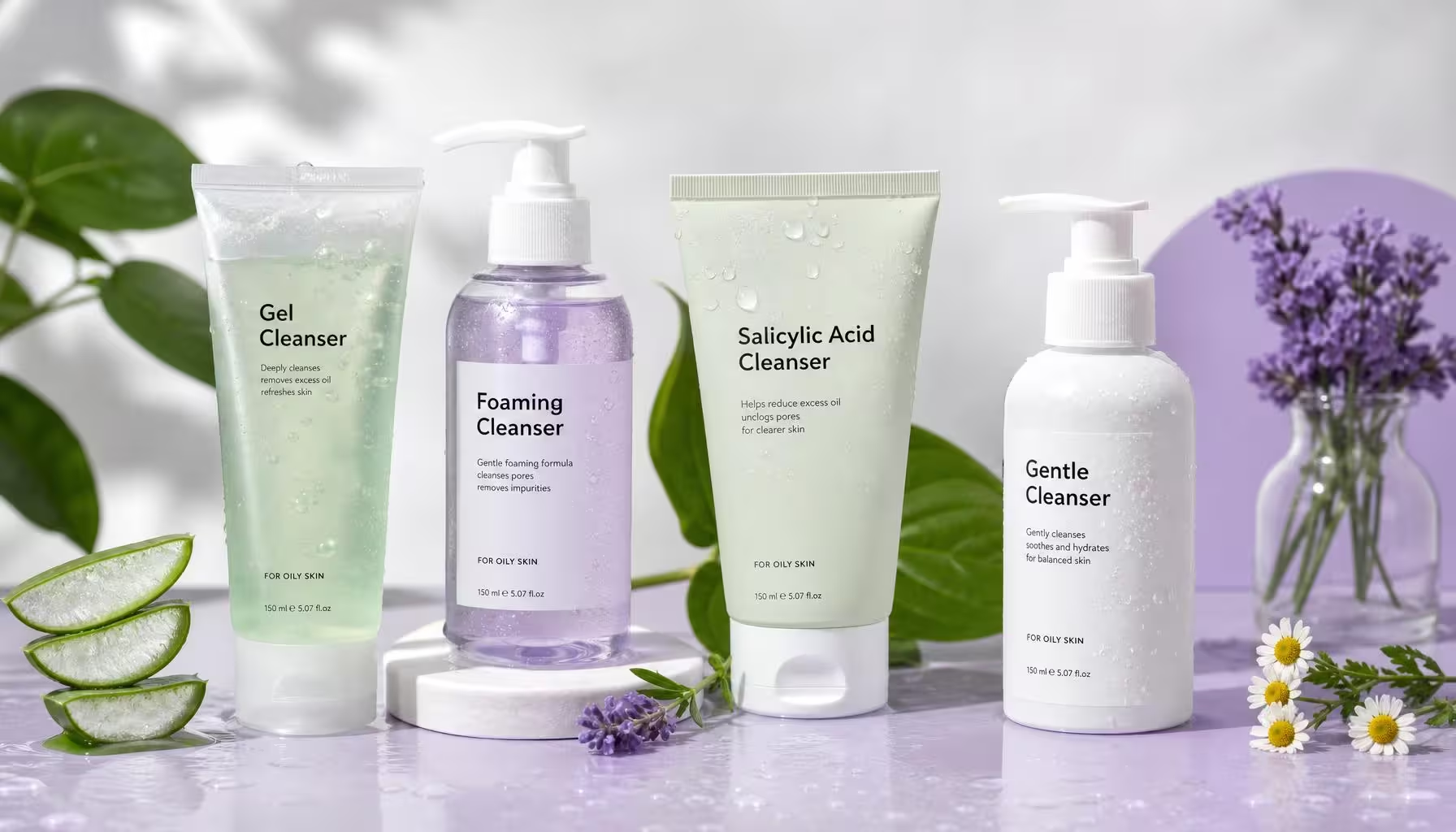
Gel Cleansers
Gel cleansers are often a great option for oily skin because they tend to feel lightweight and refreshing.
They’re particularly useful if your skin becomes greasy during the day or you live in a warm, humid climate.
Foaming Cleansers
Foaming cleansers can effectively remove excess oil and sunscreen residue.
However, if a foaming cleanser leaves your skin feeling tight after washing, it may be too drying for you.
Salicylic Acid Cleansers
These are worth considering if oily skin comes with clogged pores, blackheads, or occasional breakouts.
Because salicylic acid is an active ingredient, pay attention to how frequently you’re using it and avoid piling on too many exfoliating products.
How to Choose the Best Face Wash for Oily Skin
Instead of choosing a cleanser simply because it’s labelled “for oily skin,” consider your specific needs.
Oily but Sensitive Skin
If your skin is oily but easily irritated, choose a gentle cleanser and avoid overly strong exfoliating formulas.
A simple gel cleanser with soothing ingredients may be a better everyday option.
Oily and Acne-Prone Skin
If clogged pores and breakouts are your main concerns, a salicylic acid cleanser can be worth considering.
However, acne isn’t caused simply by having “dirty” skin, so scrubbing harder or washing repeatedly won’t necessarily improve it.
Oily and Dehydrated Skin
This combination is more common than you might think.
Your skin can produce excess oil while still lacking water. If your face feels tight after cleansing but becomes oily soon afterwards, try switching to a gentler cleanser rather than using a stronger one.
How Often Should You Wash Oily Skin?
For most people, washing the face twice a day—morning and evening—is enough.
If you’ve exercised heavily or become particularly sweaty, cleansing afterward can also make sense.
Washing your face repeatedly throughout the day may actually make your skin feel irritated and uncomfortable.

How to Wash Your Face Correctly
Even the best face wash won’t help much if you’re using it incorrectly.
Step 1: Wet your face with lukewarm water.
Step 2: Apply a small amount of cleanser and gently massage it over your skin.
Step 3: Avoid aggressive scrubbing, especially if you’re dealing with active breakouts.
Step 4: Rinse thoroughly.
Step 5: Pat your face dry with a clean, soft towel.
Step 6: Follow with moisturizer.
During the daytime, finish your routine with sunscreen.
Common Mistakes People With Oily Skin Make
Washing Your Face Too Often
It can be tempting to wash your face every time you notice shine.
But over-cleansing can irritate the skin and leave it feeling stripped.
Using Very Harsh Face Washes
A cleanser that makes your skin feel extremely tight isn’t necessarily doing a better job.
Your goal is to remove excess oil and impurities while maintaining a comfortable skin barrier.
Skipping Moisturizer
Having oily skin doesn’t mean your skin doesn’t need hydration.
A lightweight, non-comedogenic moisturizer can help keep your routine balanced.
Scrubbing Too Hard
Physical scrubbing can be irritating, particularly when you have active acne.
A gentle cleanser is usually a better everyday choice.
Using Too Many Actives
If you’re already using salicylic acid, retinoids, exfoliating toners, or other active products, adding multiple strong ingredients can increase the chance of irritation.
Keep your routine simple and introduce new products gradually.
Face Wash vs. Cleanser: Is There a Difference?
The terms “face wash” and “cleanser” are often used interchangeably.
In general, face washes tend to refer to products that are rinsed off and may have a gel or foaming texture, while cleansers can include creamier or more moisturizing formulas.
There’s no universal rule, though. What matters most is how the formula works with your skin.
Can Face Wash Get Rid of Oily Skin Permanently?
No face wash can permanently change your natural skin type.
A good cleanser can remove excess oil from the skin’s surface and help keep pores clean, but your natural sebum production is influenced by factors such as genetics and hormones.
The goal isn’t to eliminate all oil—it’s to keep excess oil under control while maintaining a healthy skin barrier.
Final Thoughts
The best face washes for oily skin aren’t necessarily the strongest ones.
Look for a cleanser that removes excess oil, sunscreen, and daily buildup without leaving your skin dry or irritated. Gel cleansers can be a great everyday choice, while salicylic acid cleansers may be helpful if clogged pores and blackheads are concerns.
Most importantly, don’t try to fight oily skin by constantly stripping it. A simple routine consisting of a suitable cleanser, lightweight moisturizer, and sunscreen can often work better than an overloaded routine.
Your skin doesn’t need to feel squeaky-clean to be clean.
Frequently Asked Questions
Which face wash is best for very oily skin?
A lightweight gel or foaming cleanser can work well for very oily skin. If you also experience clogged pores, a cleanser containing salicylic acid may be worth considering.
Is salicylic acid face wash good for oily skin?
Yes. Salicylic acid can help exfoliate inside pores and is commonly used in products designed for oily and blemish-prone skin.
Should oily skin use moisturizer?
Yes. Oily skin still needs hydration. Choose a lightweight, non-comedogenic moisturizer that feels comfortable on your skin.
How many times should I wash oily skin?
For most people, cleansing twice a day is sufficient. Additional cleansing may be useful after heavy sweating or exercise.
Can oily skin use a foaming face wash?
Yes. Foaming cleansers can work well for oily skin, provided the formula doesn’t leave your skin excessively dry or irritated.
Does washing your face more reduce oil?
Not necessarily. Washing too frequently can irritate the skin and may make your routine harder to tolerate. A consistent cleansing routine is generally more useful than repeatedly washing throughout the day.