Best Moisturizers for Dry Skin: How to Choose the Right One
Dry skin can make even a simple skincare routine feel frustrating. Your skin may feel tight after cleansing, look flaky or dull, or become uncomfortable when the weather gets cold or dry.
A good moisturizer can make a noticeable difference by helping your skin retain moisture and supporting its natural barrier. But with so many creams, lotions, gels, and balms available, choosing the right moisturizer isn’t always easy.
So, what should you actually look for?
In this guide, we’ll explain how to choose the best moisturizers for dry skin, which ingredients are worth looking for, what textures work best, and the common mistakes that can make dryness worse.
Why Does Skin Become Dry?
Dry skin occurs when the skin doesn’t retain enough moisture. The skin barrier plays an important role in keeping water inside the skin and protecting it from external irritants.
Several things can contribute to dryness, including:
- Cold or dry weather
- Hot showers
- Harsh cleansers
- Over-exfoliation
- Low humidity
- Certain skincare ingredients
- Naturally dry skin
If your skin frequently feels tight or rough, your skincare routine may need more focus on hydration and barrier support.
What Should a Moisturizer for Dry Skin Contain?
When shopping for a moisturizer, don’t focus only on the word “hydrating” on the packaging. Look at the ingredients too.
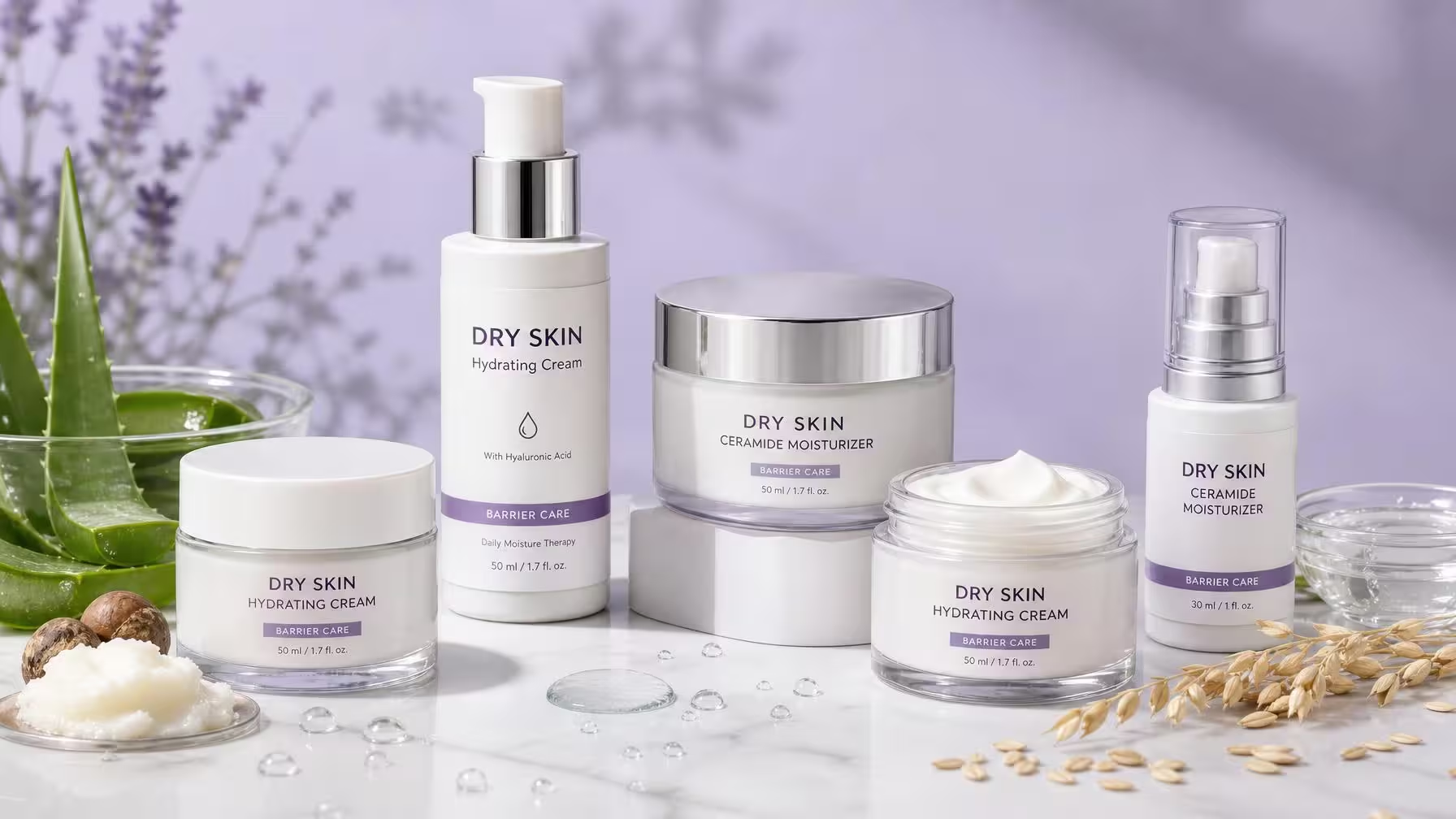
Ceramides
Ceramides are naturally occurring lipids found in the skin. They help support the skin barrier and reduce moisture loss.
A moisturizer containing ceramides can be particularly useful when your skin feels dry, rough, or compromised.
Hyaluronic Acid
Hyaluronic acid is a humectant that helps attract water to the skin.
It can provide lightweight hydration, but for very dry skin, it often works best when combined with ingredients that help reduce moisture loss.
Glycerin
Glycerin is another popular humectant that helps draw water toward the skin.
It is commonly found in both lightweight lotions and richer creams, making it a versatile ingredient for dry skin.
Shea Butter
Shea butter is an emollient that can help soften dry, rough-feeling skin.
It is often found in richer moisturizers designed for people who need additional comfort and nourishment.
Squalane
Squalane is a lightweight emollient that can help soften the skin without necessarily feeling as heavy as some traditional occlusive ingredients.
It can be a good option if you want hydration without a very thick cream.
Best Moisturizer Textures for Dry Skin
The texture of your moisturizer can make a big difference.
Creams
Cream moisturizers are usually a great starting point for dry skin.
They tend to provide more nourishment than lightweight gels and can be particularly comfortable during colder months.
Lotions
Lotions are lighter than most creams and can work well if your skin is mildly dry or if you don’t enjoy a heavy feeling.
They can also be convenient for daytime use.
Balms and Ointments
If your skin is extremely dry, a richer balm or ointment may provide more protection by helping reduce water loss.
These textures can be especially useful on particularly dry areas such as the cheeks, around the nose, hands, or elbows.
How to Choose the Best Moisturizer for Dry Skin
Not every dry-skin moisturizer will feel the same. Consider your skin’s needs before buying one.
For Mildly Dry Skin
A lightweight cream or lotion containing glycerin, hyaluronic acid, or ceramides may be enough.
You don’t necessarily need the richest product available.
For Very Dry Skin
Look for a richer cream containing a combination of humectants, emollients, and occlusive ingredients.
This combination can help hydrate the skin while also reducing moisture loss.
For Dry and Sensitive Skin
Keep the formula simple.
A fragrance-free moisturizer with barrier-supporting ingredients such as ceramides and glycerin may be a better choice if your skin is easily irritated.
For Dry and Acne-Prone Skin
Dry skin can still experience clogged pores and breakouts.
Look for a moisturizer labelled non-comedogenic if that is a concern, and choose a texture that provides enough hydration without feeling excessively heavy.
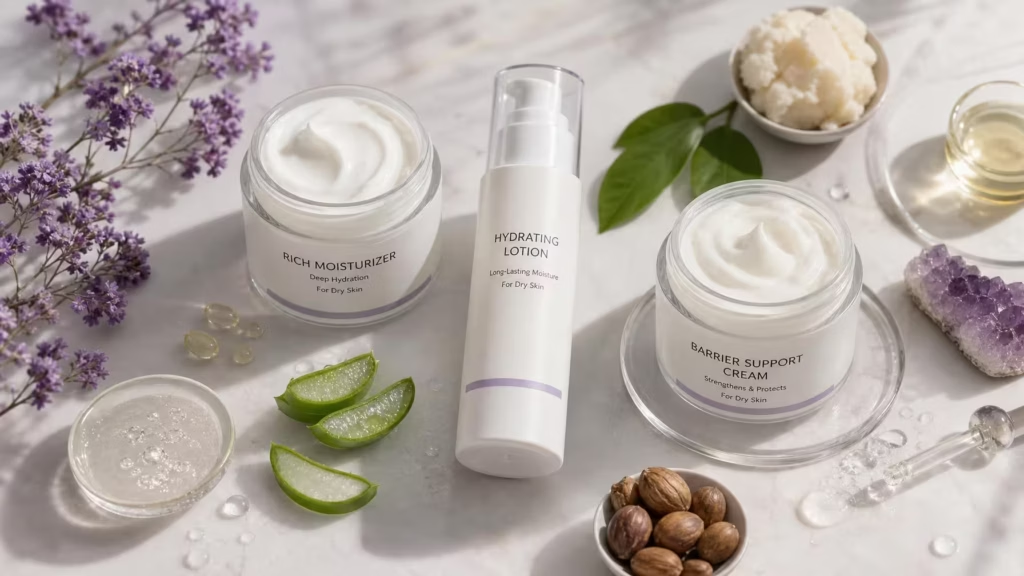
How to Apply Moisturizer for Better Hydration
The way you apply moisturizer matters too.
After cleansing, gently pat your face so that it remains slightly damp rather than completely dry.
Then apply your moisturizer evenly across your face and neck.
A simple routine could look like:
Morning:
Cleanser → Moisturizer → Sunscreen
Evening:
Cleanser → Treatment/Serum → Moisturizer
If your skin is particularly dry, you may need to apply moisturizer more generously or use a richer formula at night.
Common Moisturizer Mistakes to Avoid
Using a Very Hot Shower
Hot water can make dry skin feel even more uncomfortable. Lukewarm water is generally a better option.
Over-Exfoliating
Scrubbing or frequently using exfoliating acids can worsen dryness and irritation.
If your skin is already flaky or uncomfortable, focus on restoring hydration instead of adding more exfoliation.
Choosing a Moisturizer Only by Texture
A thick cream isn’t automatically better than a lighter moisturizer.
Ingredients and how your skin responds to the product matter more than how thick it feels.
Skipping Moisturizer Because Your Skin Feels Greasy
Sometimes a moisturizer may feel heavy because the formula isn’t right for you.
Instead of skipping moisturizer altogether, try a lighter formulation.
Changing Products Too Frequently
Your skin may need time to adjust to a new routine.
Introducing several new products at once can also make it difficult to figure out what is helping or irritating your skin.
Can You Use Moisturizer Every Day?
Yes. Moisturizer can be used daily as part of a skincare routine.
For dry skin, using moisturizer consistently can help maintain hydration and support the skin barrier.
You can adjust the amount and texture depending on the season. A richer cream may feel more comfortable during winter, while a lighter lotion may be preferable during warmer weather.
Can You Use Face Moisturizer at Night?
Absolutely.
Nighttime is a good opportunity to use a richer moisturizer if your skin needs additional hydration.
You can apply it after your serum or treatment product and allow it to remain on the skin overnight.
What Is the Difference Between Hydration and Moisture?
These terms are often used interchangeably, but they aren’t exactly the same.
Hydration generally refers to increasing the water content of the skin, while moisturizing involves helping the skin maintain hydration and reducing moisture loss.
This is why a good moisturizer often combines different types of ingredients:
- Humectants attract water.
- Emollients soften and smooth the skin.
- Occlusives help reduce water loss.
For very dry skin, products that combine these approaches can be particularly helpful.
Final Thoughts
Finding the best moisturizer for dry skin doesn’t have to be complicated.
Look for ingredients such as ceramides, glycerin, hyaluronic acid, squalane, and shea butter, and choose a texture that feels comfortable for your skin. If your skin is very dry, a richer cream or balm may work better than a lightweight gel.
Most importantly, don’t assume that stronger or thicker always means better. The best moisturizer is one that provides enough hydration, supports your skin barrier, and is comfortable enough for you to use consistently.
A simple routine with a gentle cleanser, suitable moisturizer, and daily sunscreen can go a long way toward keeping dry skin comfortable.
Frequently Asked Questions
Which moisturizer is best for very dry skin?
Rich creams containing ingredients such as ceramides, glycerin, shea butter, and other moisturizing ingredients can be useful for very dry skin.
Is hyaluronic acid good for dry skin?
Yes. Hyaluronic acid is a humectant that can help attract water to the skin. It is often most useful when paired with moisturizing ingredients that help reduce water loss.
Should dry skin use moisturizer twice a day?
Many people with dry skin find it helpful to moisturize in the morning and evening. You can adjust the amount depending on how dry your skin feels.
Is a cream better than a gel for dry skin?
Creams are generally more suitable for dry skin because they tend to provide more substantial moisturization. However, the best texture depends on your individual skin and preferences.
Can dry skin use a moisturizer with hyaluronic acid?
Yes. Hyaluronic acid can provide hydration, while other ingredients in the moisturizer can help support the skin barrier and reduce moisture loss.
Should you moisturize dry skin after cleansing?
Yes. Applying moisturizer after cleansing can help maintain hydration and reduce the feeling of tightness that some people experience after washing their face.